Overspeeding is a significant factor in road accidents. As per WHO reports, speeding accounts for almost 58.7% of road accidents and causes approximately 1.3 million deaths annually. Sometimes drivers hit building entrances deliberately to inflict damage, while at other times, accidents occur due to erratic or reckless driving. For this reason, taking proactive safety and security measures is vital—not only to protect your personnel and assets, but also to safeguard the surrounding public.
Engineers have developed specialized access control tools to mitigate vehicle impact risks, such as high-security road blockers and security bollards. This comparison details how road blockers and hydraulic bollards differ in functionality, installation requirements, and security levels to help you choose the ideal system for your organization.
The Comparison
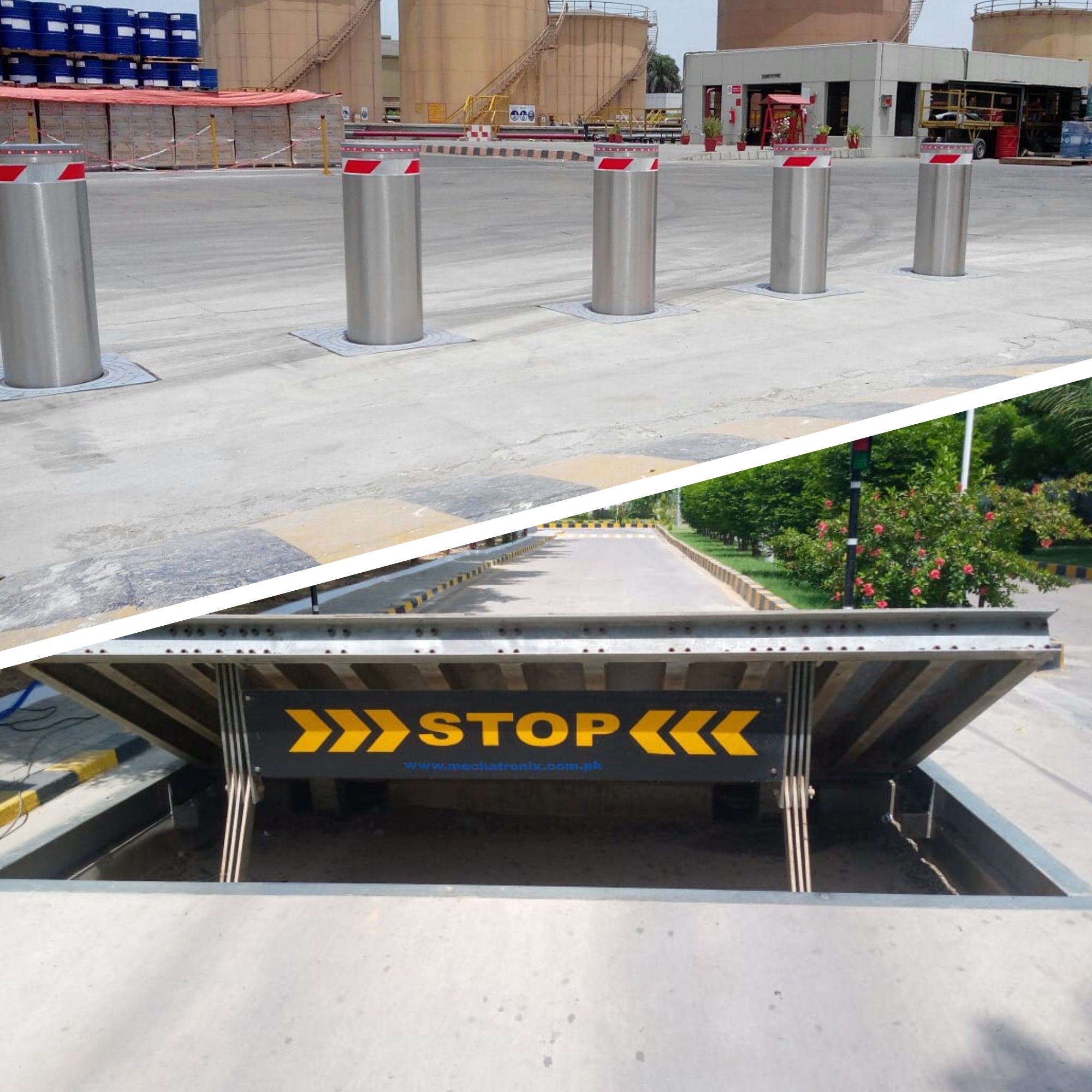
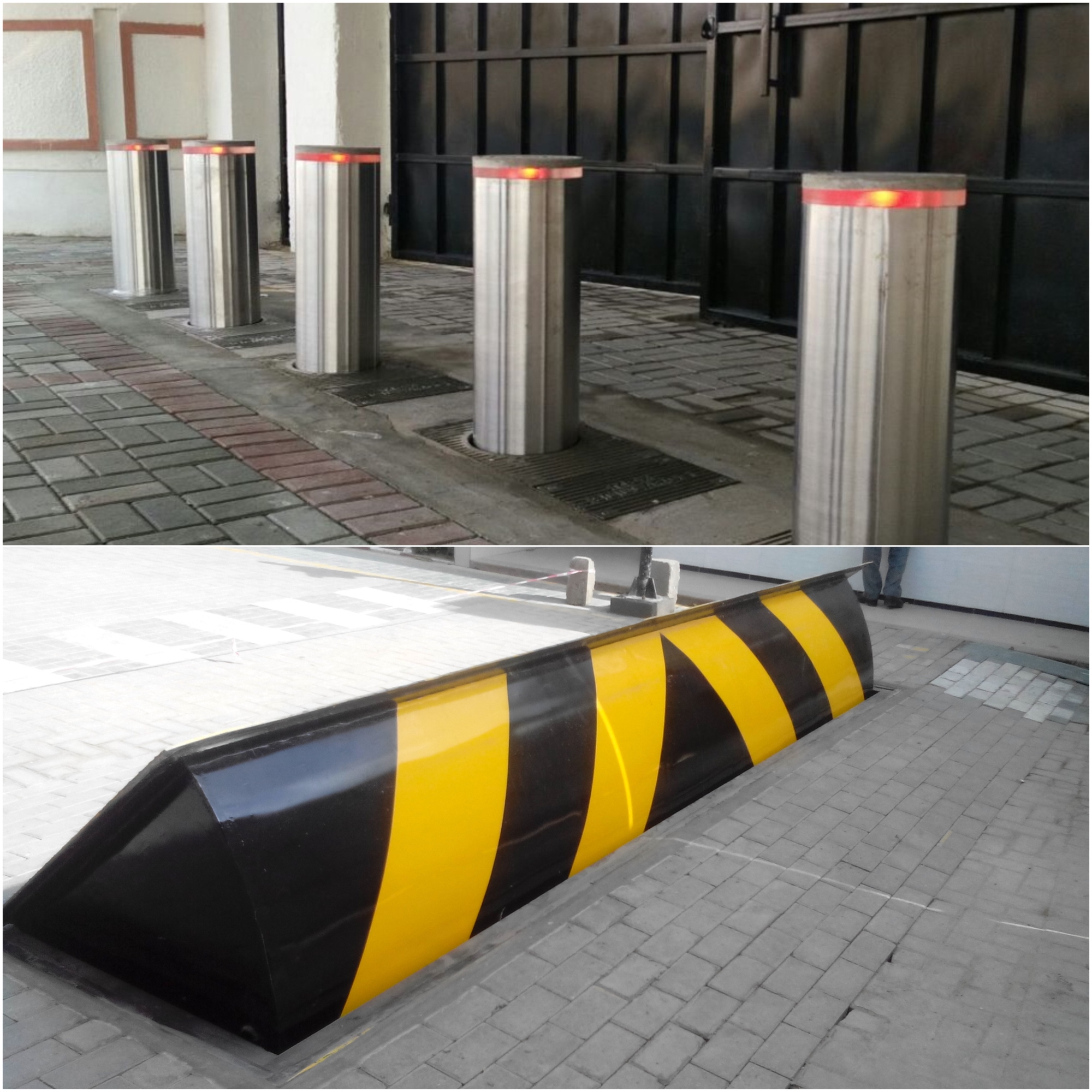
Hydraulic bollards serve as a prominent, overt visual deterrent. They provide a high-level security method for guarding roadways against unauthorized vehicle entry. The primary objectives of installing hydraulic bollards include:
• Stopping unauthorized vehicles while allowing free pedestrian movement.
• Intercepting hostile or runaway vehicles to prevent entry into protected zones.
• Mitigating collision risks so occupants and pedestrians remain safe.
Originating from traditional stone kerbstones in the late 1800s, modern security bollards have evolved into sleek, automated systems available in diverse configurations, finishes, and operating mechanisms tailored to specific protection needs.
Road blockers (also known as path barriers or wedge barriers) are advanced physical security systems engineered with anti-collision, anti-terrorism, and heavy load-bearing capabilities. Built with durable steel housings and hydraulic drive systems, road blockers act as mandatory interception barriers designed to resist extreme vehicular kinetic impact.
Chief Function
Security Bollards: The main function of security bollards is preventing hostile vehicle ramming into building facades, storefronts, and public pedestrian zones. These short, sturdy cylinders provide long-term protection while maintaining open walkways for foot traffic. Typical installation sites include parking lots, sidewalks, construction perimeters, toll plazas, and security checkpoints where vehicular access must be restricted without impeding pedestrian entry.
Road Blockers: Road blockers create an impassable physical wall across a driveway or roadway. Available as surface-mounted or deep-foundation units, hydraulic road blockers operate dynamically: during normal conditions, the heavy wedge remains flush with the road to permit authorized passage; when raised, it creates a rigid barrier against hostile entry. Certified crash-rated road blockers completely seal off access lanes to prevent unauthorized vehicular or pedestrian intrusion.
Locations for Installation
Bollards: Primarily installed around corporate headquarters, educational campuses, parking structures, retail plazas, and public walkways. These locations require protection against vehicle-into-building collisions while preserving high pedestrian throughput.
Road Blockers: Installed at high-risk, sensitive perimeters requiring absolute vehicle access control and anti-terrorist defense. Ideal sites include government buildings, military bases, police headquarters, airports, data centers, and critical infrastructure facilities susceptible to vehicle-borne threats.
Specifications & Features
Hydraulic Bollards:
• Crash-rated to international standards (including K-4, K-8 and K-12.).
• Cylindrical design featuring rapid deployment times and shallow foundation options.
• Available in automatic retractable (hydraulic/pneumatic) and fixed variants.
• Selectively blocks vehicle entry while allowing unhindered pedestrian movement.
Certified Road Blockers:
• Crash-tested to stop heavy vehicles weighing up to 15,000 lbs (7,000 kg) travelling at high speeds.
• Equipped with manual hydraulic hand-pumps for emergency operation during power outages.
• Seamlessly integrates with Access Control Systems (ACS), RFID readers, biometric terminals, and ANPR license plate recognition.
• Configurable as surface-mount barriers, shallow-mount wedges, or heavy-duty deep-foundation hydraulic blockers operated via wireless remotes or central control panels.
Which One Fits Best For You?
| Parameter | Security Bollards | Heavy-Duty Road Blockers |
|---|
| Primary Objective | Perimeter security with open pedestrian flow | Total lane blocking & anti-ramming defense |
| Pedestrian Mobility | Unrestricted | Restricted when fully raised |
| Security Level | Medium to High (K4–K12) | Maximum / Anti-Terrorist (K4–K12) |
| Installation Site | Lobbies, footpaths, plazas, parking lots | High-security gates, military, airports, banks |
| Operation Type | Automatic Retractable / Fixed | Surface Mount / Deep Hydraulic Wedge |
For custom security consultations, crash-rated bollards, and hydraulic road blocker installations across Pakistan, contact Mechatronix Solutions today!