The earth is the only planet where human beings survive. That’s why life is more valuable than anything else on earth. You may not know that more than 700 children are killed annually by combustion accidents. A recent accident of fire in Karachi, Centaurus mall and Rehmanabad metro bus station in Pakistan are not ignoreable. That’s why it’s necessary to have security precautions to help prevent combustion from occurring in the first place and from minimizing its impact if they do happen. A combustion accident can deliberately affect a person, a building, or a city. If the organizations are not adequately managed, they will be caused extensive damage and losses of lives.
First of all, activate your flame warning systems. A warning system is absolute flame protection if they are helpful. The smoke warns method is designed to alert us to an emergency so that we can take action to protect ourselves, our staff and the general public. Such methods don’t detect heat, but smoke, carbon monoxide and other relevant scenarios. If your smoke alarms need to be fixed, please do not wait for the next minute because an emergency can happen at any hour and cause massive damage to your organization. It is better to prepare for disasters beforehand, not just for yourself but for staff and the public.
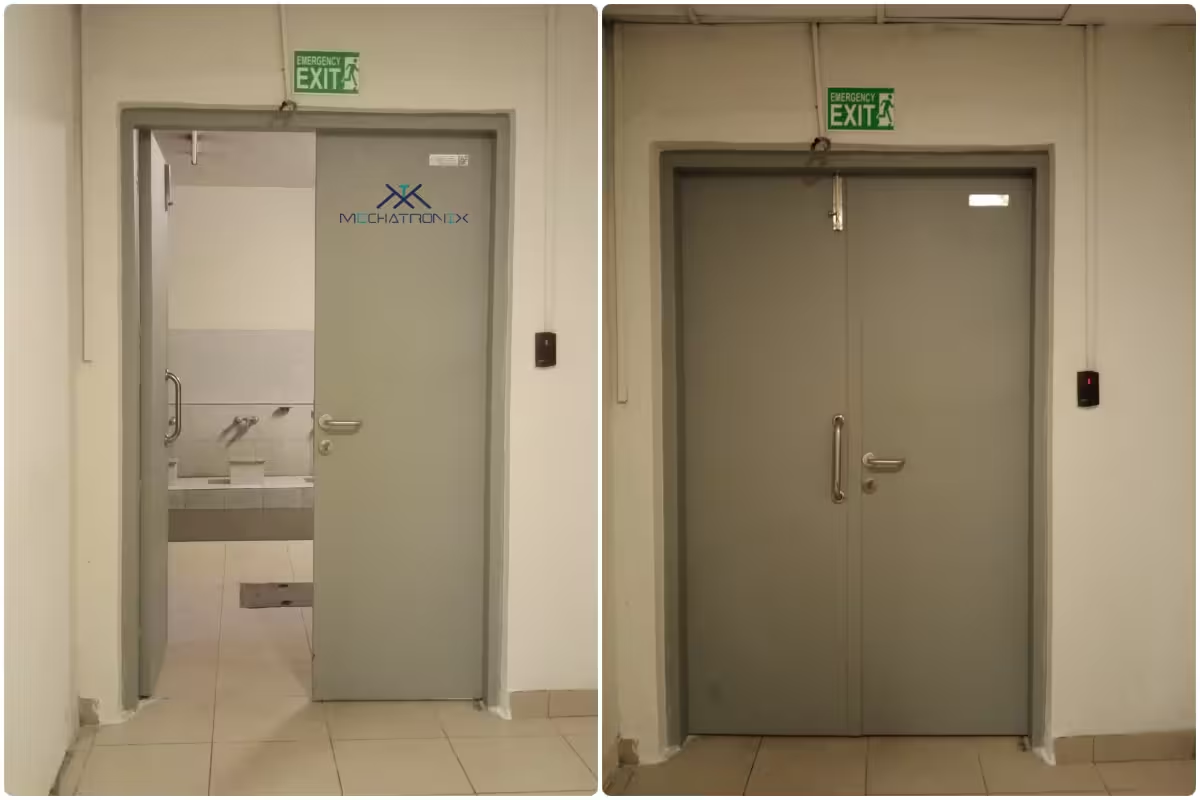
Emergency exit routes are essential because they provide a clear, secure way to evict a building in a crisis or disaster. Escape routes must be kept clear and labelled of all obstructions. Moreover, escape routes must be fireproof. For instance, we have fire exit doors. Such ways should lead to safety points. All responsible organizations must have an escape plan that identifies the action that employees can take in the event of a firestorm or other disasters like earthquakes and attacks. Usually, at the workplace, there must be two emergency exit doors; however, it depends on whether the organization is big or small.
Security signs and symbols are essential safety communication tools; they help to indicate various hazards present in plant sites or workplaces and guide about heat exits routes which can minimize the happening and damage through a combustion emergency. Fire-safety signs are necessary as they show you critical information about evacuation procedures, highlight dangerous areas, and guide you to the emergency exit doors.
One thing to remember about building safety codes is that the organization must know the difference between UK and USA signs, as they have differences. Other than exit signals, there are emergency maps that can guide staff during their training process. Emergency maps show you the complete security protection ways for eviction in disasters.
Flame retardants are chemicals used in different materials to stop or slow the spreading of flame. Complete flame protection tools, including furniture, carpets, curtains, paints, ceiling e.t.c. can save valuable lives and resources. As you know, the spread of flame can cause colossal damage. However, if the holding items and building material is heat-retardant, it will be affected less and save more lives than before. Multinational companies intend to use such material in their offices as they know the material used in the interior can save or endanger deliberately. Moreover, keep important stuff such as medical equipment and medications handy for quick entrance in the event of a building emigration.
Fire safety companies are always there for people’s defence. A responsible firm must affiliate with such companies. There are certain flame-protection companies in Pakistan, like MAB fire protection etc. They perform inspections for your building, as well as your safety equipment. Further, they are certified by your firm smoke protection and will help you with further necessities.
A fireproof door is a certified gate that can hold a flame up to a specific time. It provides an escape route through the building in a condition of an incident blaze. The frequency of these doors are between FD30 to FD 120 (30 to 120 minutes). For further details regarding such tools, you can read other blogs on the fire doors.
It is crucial to secure your building, not just the doors but the windows. These are small spaces but can cause a significant death rate by the spread of combustion. For this reason, fireproof windows are being invented. Certified windows are fire-rated that can bear up to 1600° F. It is a particular type of glass but can mark a huge difference in performance. These unique windows are approved by British test standard BS-476 as well.
The Earth is the only planet where human beings survive—that’s why life is more valuable than anything else. Tragic fire incidents across Pakistan, including major blazes in Karachi commercial buildings, the Centaurus Mall fire in Islamabad, and the Rehmanabad Metro Station incident in Rawalpindi, serve as urgent reminders that fire safety cannot be ignored. Implementing comprehensive fire safety precautions is essential to prevent combustion from occurring and to minimize loss of life and property if an emergency arises.
Early warning detection systems provide absolute flame and smoke protection. Detection networks are engineered to alert occupants immediately to hazardous conditions so staff and the public can evacuate safely. These systems detect smoke, carbon monoxide, and rapid thermal increases. If your smoke or heat alarms require repair or maintenance, address them immediately—emergencies occur without warning.
Emergency exit routes provide a secure, unobstructed path to evacuate a facility during a crisis. Escape corridors must remain completely clear of storage or obstructions and should lead directly to designated outdoor assembly points. Furthermore, exit paths must be protected by fire-rated doors. Responsible organizations should maintain a detailed emergency evacuation plan tailored to fire, earthquake, or security emergencies.
Safety signage and symbolic markers are critical communication tools during a crisis. Illuminated exit signs highlight escape paths, dangerous zones, and emergency doors, minimizing panic during low-visibility conditions. Facility managers should ensure signage complies with local and international building safety codes. Additionally, eye-level emergency evacuation maps should be posted throughout corridors to guide staff during drills and actual emergencies.
Flame-retardant materials are treated with fire-inhibiting chemicals to slow or prevent the spread of fire. Incorporating flame-retardant furnishings, carpets, curtains, paints, wall claddings, and ceiling tiles significantly slows combustion rates, giving occupants extra time to escape. Using fire-inhibiting interior materials safeguards organizational assets and reduces overall structural damage.
Collaborating with certified fire protection engineering firms ensures your building remains compliant with national safety standards. Professional fire safety companies conduct routine inspections, audit life-safety systems, service suppression equipment, and assist in certifying facilities to meet municipal fire safety regulations.
Fire-rated doors are certified barriers designed to resist extreme temperatures and contain fire, smoke, and toxic gas for specified durations (ranging from FD30 to FD120, or 30 to 120 minutes). Securing window openings is equally critical, as unprotected glazing can fail rapidly under intense thermal pressure and accelerate fire spread. Certified fire-rated windows—tested under standards such as BS 476—can withstand temperatures up to 1600°F, creating a thermal barrier that preserves life safety corridors.
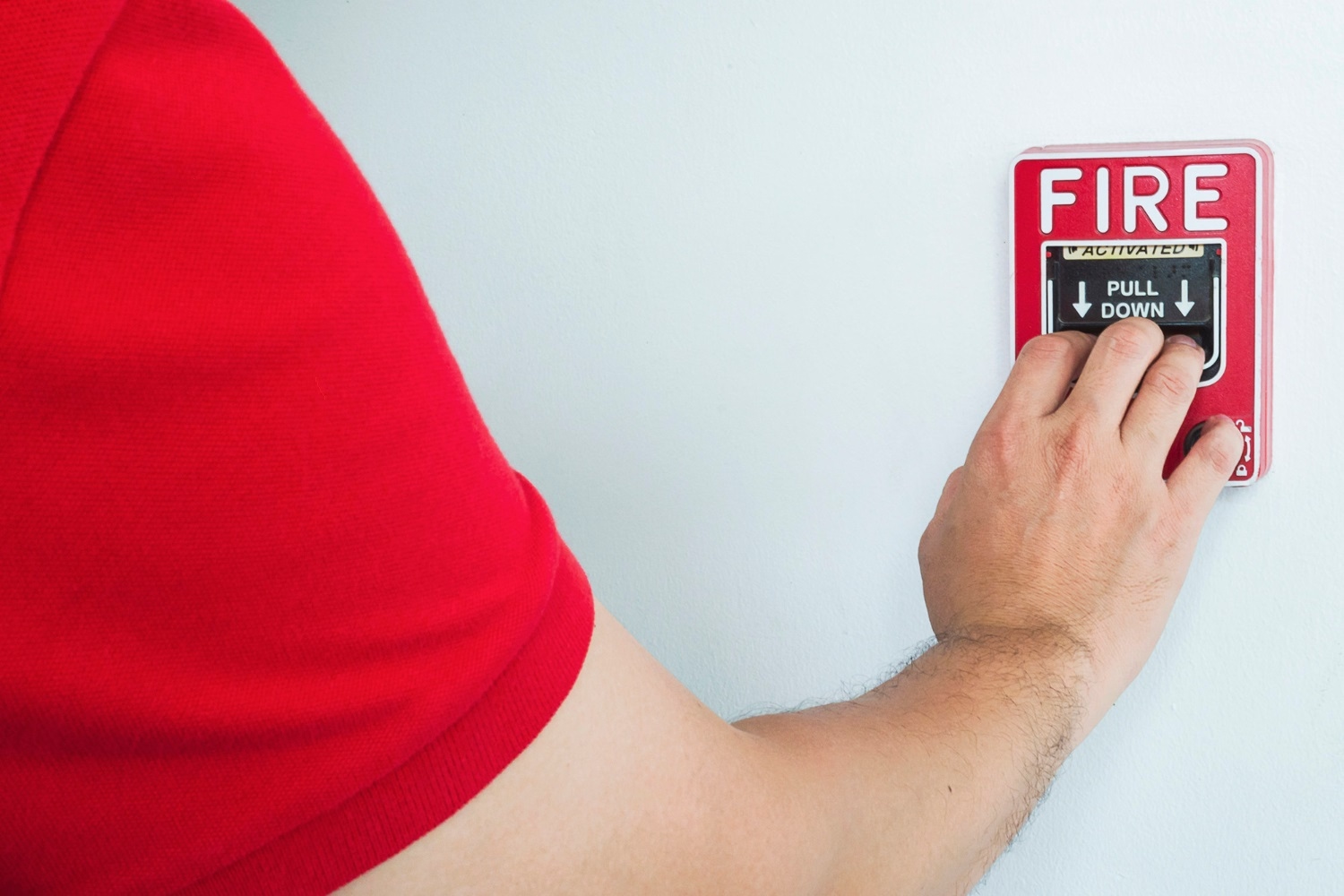
Integrating manually operated call points (“break glass” units) alongside automatic detection systems provides staff with an immediate way to raise alarms. Equipping each floor with properly rated, accessible fire extinguishers (ABC dry chemical, CO2, or foam) and fire hose reels ensures small ignition sources can be contained before escalating into major blazes.
A safety plan is only effective if occupants know how to execute it. Organizations must conduct bi-annual fire drills and practical safety training to familiarize staff with evacuation routes, assembly procedures, and the basic operation of fire extinguishers. Routine drills eliminate panic, refine response times, and identify potential bottlenecks in your evacuation strategy.
Operating a building without comprehensive fire protection systems, fire doors, and rated windows exposes your organization to extreme operational and life-safety risks. Contact Mechatronix Solutions today for a free fire safety inspection or audit to secure your premises!
The fire alarm system relies heavily on manual call points—typically small, wall-mounted break-glass boxes—allowing anyone who spots a fire to trigger the building-wide alarm immediately. Manual call points are a vital line of defense; if automated smoke or heat sensors are located far from an initial ignition source, thermal delay could slow the automatic response. Activating a manual call point instantly alerts occupants, buying precious time to evacuate through fire-rated exit doors and notify emergency services before combustion escalates out of control.
The fire safety precautions outlined above significantly reduce the risk of structural damage and life-threatening injuries during emergencies. Implementing these measures is not only a regulatory requirement under national building safety codes, but also a vital operational responsibility. Organizations that prioritize life-safety infrastructure operate more securely, efficiently, and resiliently.
Operating a commercial building or industrial facility without certified fire alarms, fire doors, and rated windows poses a massive operational risk. Do not leave your organization vulnerable—Mechatronix Solutions provides complete, end-to-end life safety defense to secure your facility as quickly as possible.
Contact us today for a free fire safety inspection or audit, or reach out to our technical team for immediate assistance!